Start here
The Back & Neck Handbook
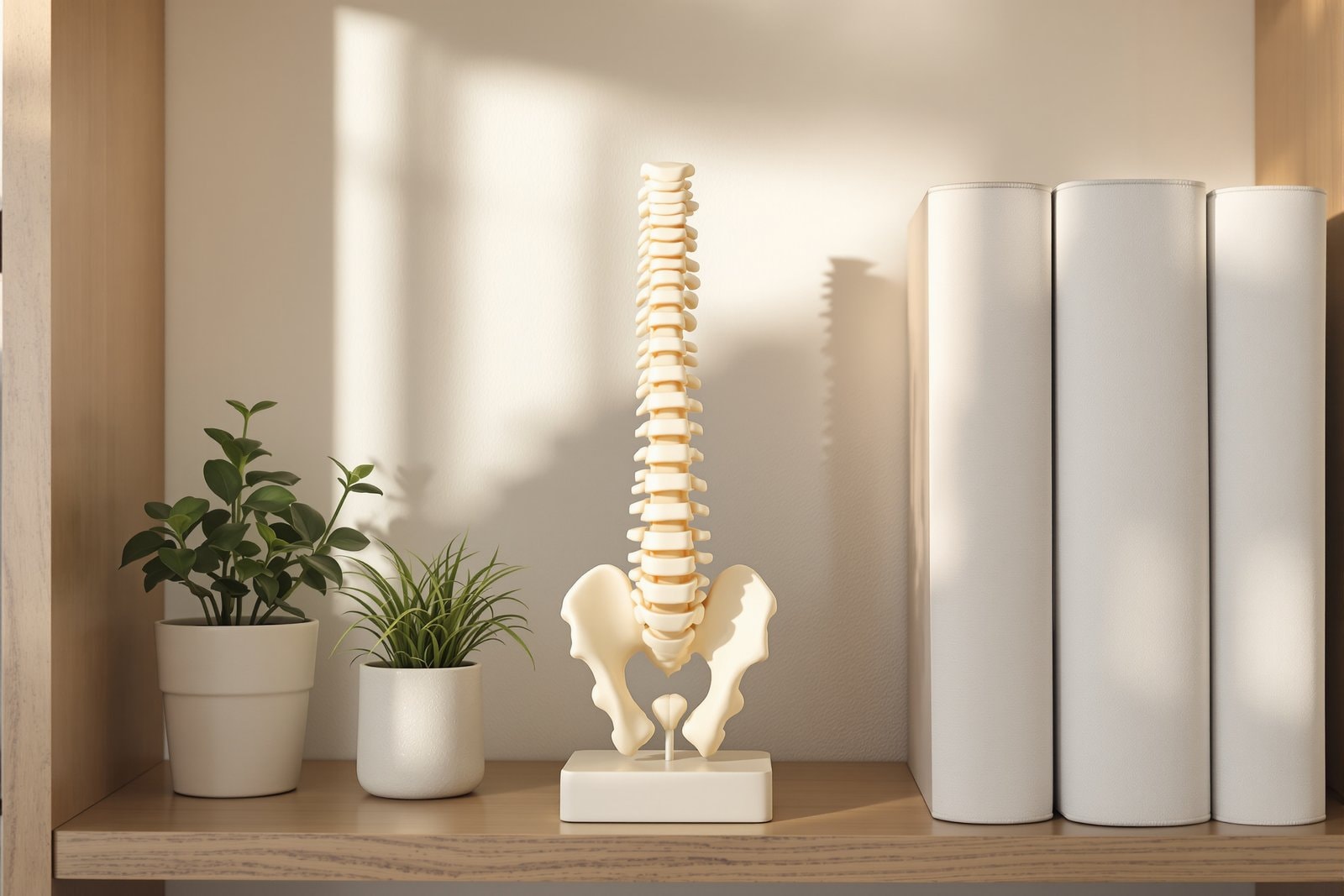
Backs and necks ache for all sorts of ordinary reasons: a long day at a desk, an afternoon of digging, a hard first game of the season, a night on an unfamiliar pillow. This handbook explains, in plain words, how the spine is put together, what the common aches and injuries are called, and which everyday habits people pay attention to. It also sets out, clearly, the signs that mean pain should be looked at by a doctor rather than waited out.
What you will find here
The pages are grouped into five sections. Understanding pain covers the complaints people most often mention: low back pain, aches between the shoulder blades, a stiff or sore neck, disc problems and sciatica, and the kind of headache that seems to start in the neck. How the spine works is a short anatomy course, from the small bones at the base of the skull to the pelvis, with a page on how the spine changes later in life and a glossary for the words that tend to come up. Everyday habits looks at posture, desks and chairs, lifting and carrying, and the aches that come with some kinds of work. Sport and activity covers sports injuries, sprains and strains, how people lower the risk of getting hurt, how injured soft tissue repairs itself, and keeping active when a back is sore. Care and safety explains what chiropractic and spinal manipulation are, what to ask before seeing any practitioner, and when pain needs prompt medical attention.
Each page stands on its own, so there is no need to read in order. If something is worrying you right now, start with When to see a doctor.
How the pages are written
Everything here is written for ordinary readers rather than clinicians, and it tries to describe rather than prescribe. Where a page leans on a fact, it names the public source it comes from, most often the United States National Institutes of Health through MedlinePlus and its specialist institutes, the Occupational Safety and Health Administration, and the patient pages of the American Academy of Orthopaedic Surgeons. Those organisations publish far more detail than a handbook like this can hold, so each page points to the relevant one in the course of the text.
What the pages do not do is just as important. They do not diagnose, they do not tell you which treatment to choose, and they make no promises about what any exercise, therapy or practitioner will do for you. Bodies differ, injuries differ, and the same ache can have quite different causes in two people. The National Institute of Neurological Disorders and Stroke puts it simply: no two people feel pain the same way, and pain is a highly personal experience. A health care provider who can examine you and hear your whole story is the right person to make decisions with.
A note on everyday aches
A sore back or neck is a familiar experience for many adults, and it often comes and goes. MedlinePlus describes back pain as ranging from a dull, constant ache to a sudden, sharp pain, and it separates pain that comes on suddenly and passes from pain that lingers. Knowing the vocabulary makes it easier to describe what you are feeling, to ask good questions, and to notice when something does not fit the usual pattern.
That last point is the thread that runs through the whole handbook. Ordinary stiffness after an unusual effort is one thing; pain after a fall or a crash, pain with numbness or weakness in a limb, or pain that comes with a fever is another. Those warning signs appear on every page where they matter, and they are gathered in one place on the When to see a doctor page.
Who this is for
The handbook is written for adults who want to understand their own backs and necks a little better: people who sit at a screen all day, people who garden, lift, carry or build for a living, weekend runners and players, and older adults who want to keep moving comfortably. It is not written for children or about pregnancy, and it is no substitute for care from someone who can examine you. To learn more about what this site is and is not, read About this handbook.
Understanding pain
- Low back pain
Short-lived and longer-lasting pain, common everyday causes, and ordinary days while it settles.
- Mid and upper back
The thoracic spine, the ribs and the muscles around the shoulder blades.
- Neck pain
Stiffness, strain, screens, sleep positions, and pain that spreads.
- Discs and sciatica
What the discs are, what a herniated disk is, and what sciatica describes.
- Headaches and the neck
Primary and secondary headaches, and the triggers linked with a stiff neck.
How the spine works
- The spine
Regions, curves, vertebrae, discs, joints, ligaments and nerves.
- Lower back anatomy
Lumbar vertebrae, discs, facet and sacroiliac joints, the pelvis and the muscles.
- Neck anatomy
Cervical vertebrae, discs, nerve roots and the muscles that hold up the head.
- Back health and ageing
How the spine changes with age, and staying active later in life.
- Glossary
Short definitions of the words that come up most.
Everyday habits
- Posture
Why there is no perfect position, and why changing position matters.
- Desk setup
Chair, screen, keyboard, laptops and regular breaks.
- Lifting and carrying
Sizing up a load, keeping it close and avoiding a twist.
- Work strain
Repetitive, forceful and awkward tasks, and how ergonomics looks at them.
Sport and activity
- Sports injuries
Acute and overuse injuries, and what raises the risk.
- Sprains and strains
Ligament, muscle and tendon injuries in plain words.
- Preventing sports injuries
Warming up, building gradually, rest days and kit that fits.
- How soft tissue heals
Soft tissues, and the general stages of repair after an injury.
- Staying active
Everyday movement, pacing and fitting activity in.
Care and safety
- When to see a doctor
The warning signs that mean pain should be checked promptly.
- What is chiropractic?
The profession, what practitioners do, and how they are licensed.
- Spinal manipulation
What the terms mean, who uses them, and the safety picture.
- Before a first visit
What to bring, what to ask and what to expect.